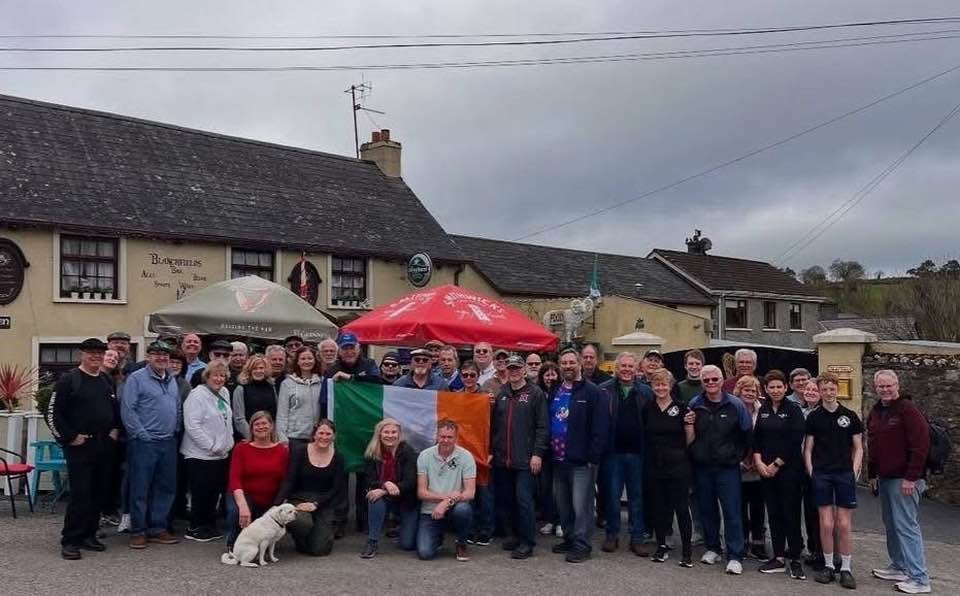
Visit to Wolfe Tone’s grave Bodenstown
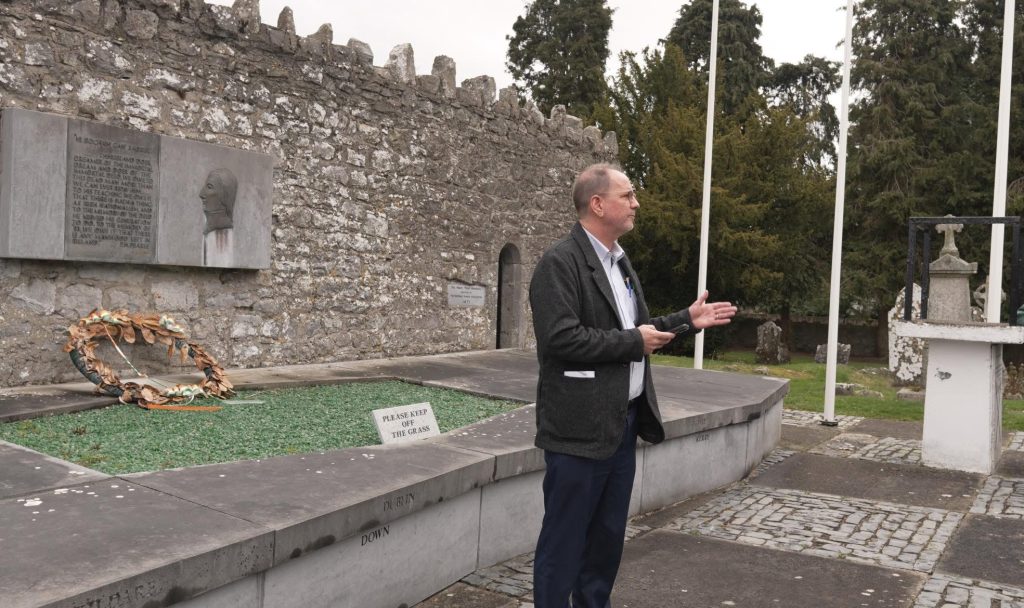
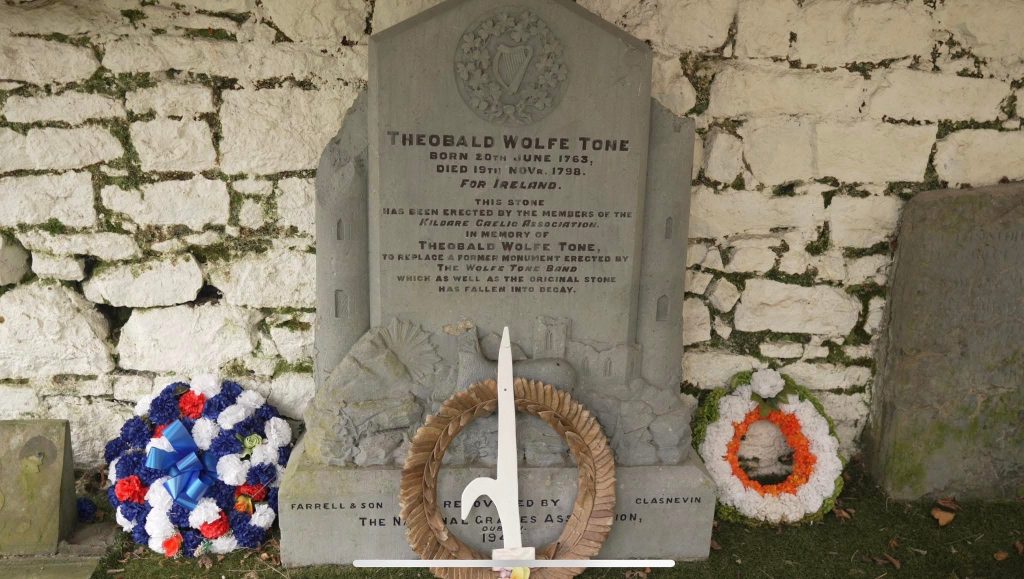
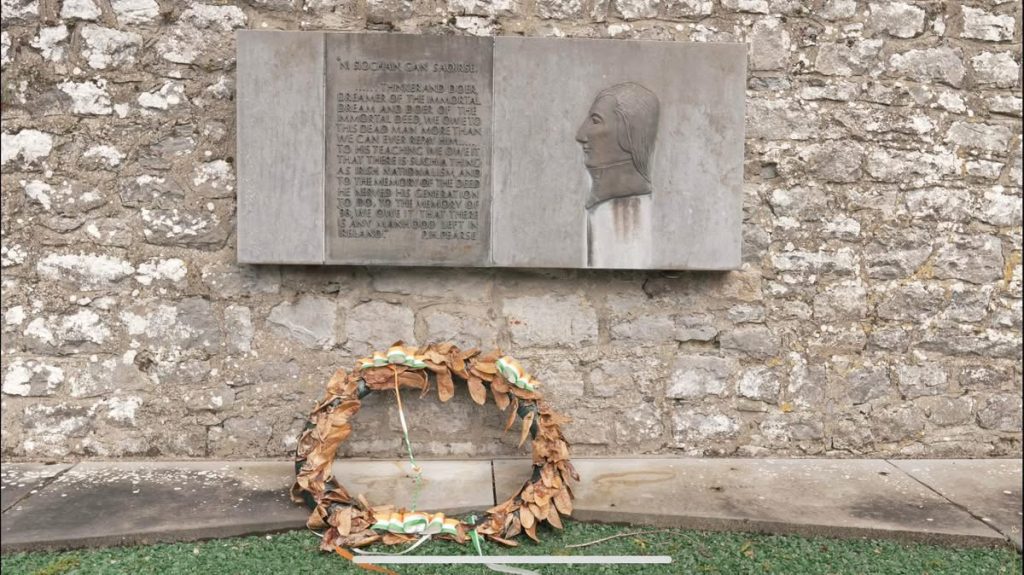
The gravesite of Theobold Wolfe Tone, father of Irish Republicanism, has been a place of pilgrimage for Irish Nationalists since at least 1873, when the 75th anniversary of his death was recognized with much pomp. Patrick Pearse delivered the traditional graveside oration in June of 1913 declaring to those assembled that they had come to the “holiest place in Ireland,” and that he found it difficult to speak in so hallowed a place. In this, the first stop of our tour we joined the long line of Irish men and women who have paid their respects to the man whose goal was “to substitute the common name of Irishmen in place of the denomination of Protestant, Catholic or Dissenter….”
Vinegar Hill site of 1798 Rebellion
The high-water mark of the Rebellion of 1798 in Wexford came at Vinegar Hill on June 21, 1798. After early successes, the United Irish forces had consolidated on this high point east of Enniscorthy. Among those in the Irish camp was the famous Father John Murphy of Monageer Parish (Boolavogue) who had acceded to the requests of his parishioners to take up arms and lead them in the fight for Ireland’s freedom. The homemade pikes of he Irish people, alas were no match for British artillery and in the words of poet Seamus Heaney, “the Hillside blushed, soaked in our broken wave…” At this stop we stood atop Vinegar Hill, where the view is much as it was in 1798 and reflect upon the events of 1798 and the Irish men and women who gave their lives pursuing the dream of Liberty.
The National 1798 Rebellion Centre, Enniscorthy
Clashganny County Carlow and the Barrow Way
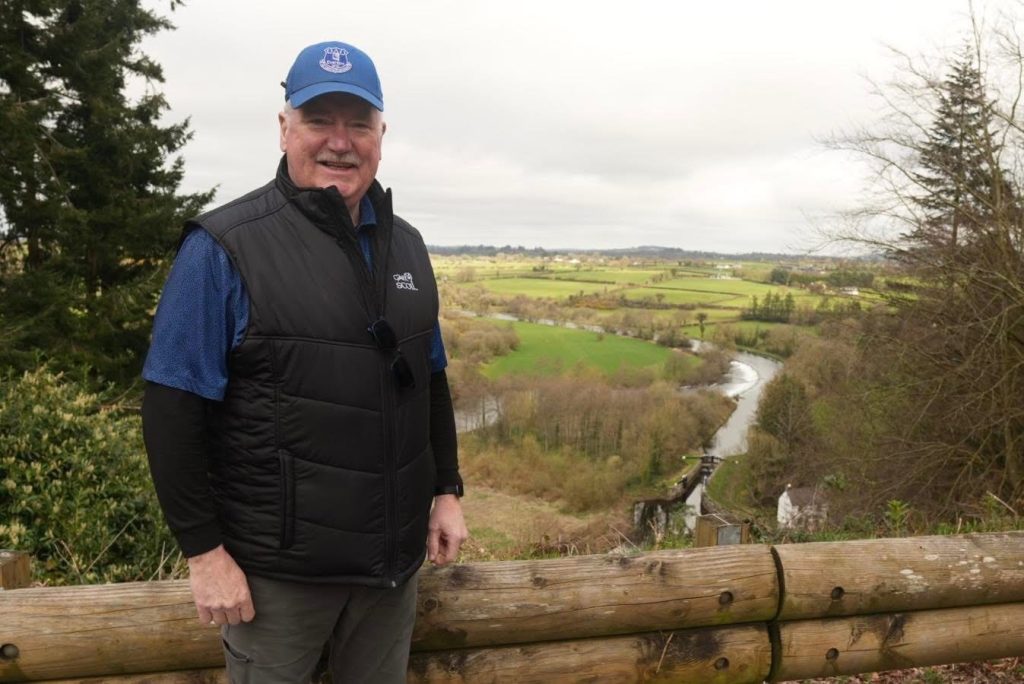
St. Mullins
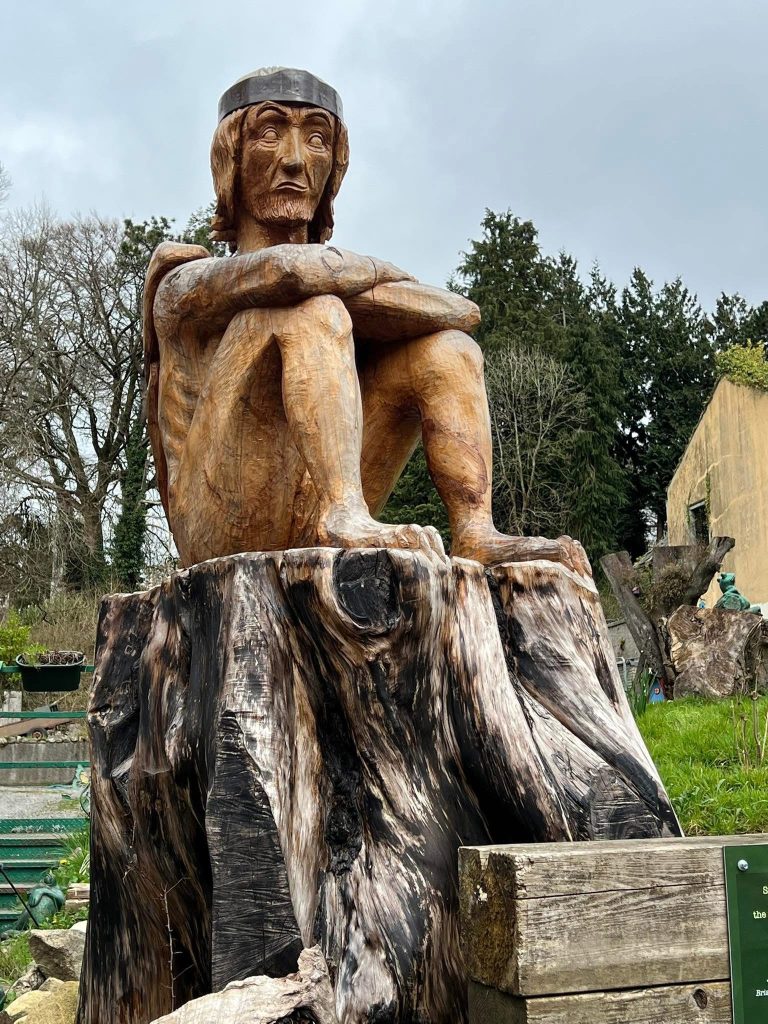
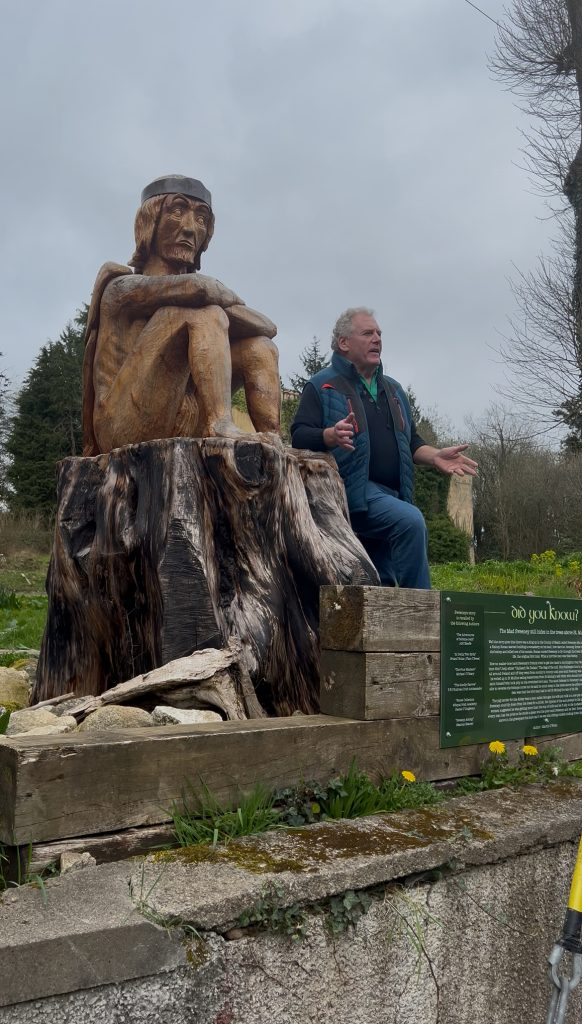
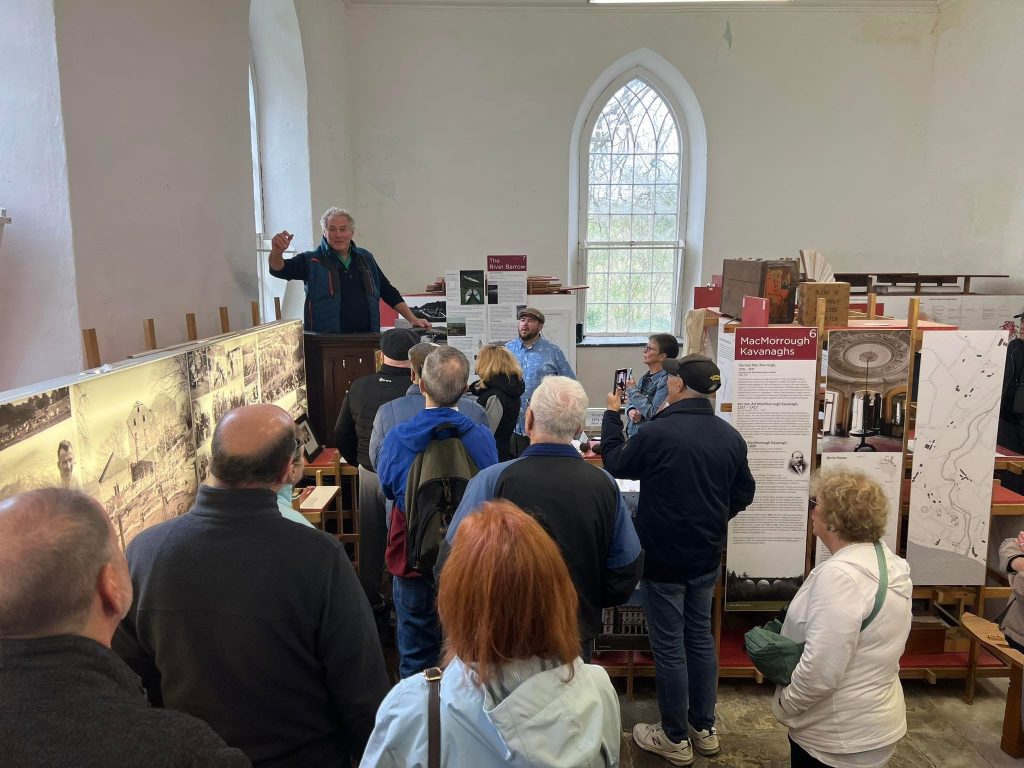
Cobh Heritage Center
Ancestors of many on our trip will have undoubtedly taken their last look at Ireland as the ship taking them to North American sailed out of Cóbh harbor. The statute of Annie Moore, the first person to be processed through Ellis Island, stands on the waterfront, a silent sentinel and tribute to the more than two million Irish men and woman who passed through this port town as they emigrated to America. The R.M.S. Titanic made its last port call in Cóbh before proceeding on its ill-fated voyage. Cóbh (Spike Island) was also one of the strategically important “Treaty Ports” initially retained by the British in the Anglor-Irish Treaty of 1921, then handed over to the Free State, to the delight of Eamon de Valera and horror of Winston Churchill, in 1938.
Middleton Distillery
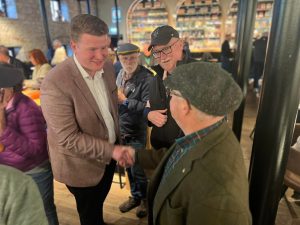
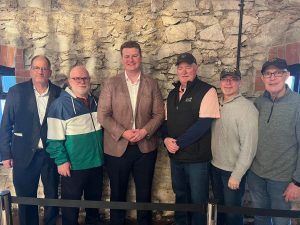
While at the distillery we were welcomed by Finna Fail representative James O’Connor the TD for the area.
Choctaw Memorial
We visited the Kindred Spirits memorial to the Choctaw Native Americans who sent donations to Ireland’s starving during the Great Hunger.
Kinsale, County Cork
Beal Na Blath
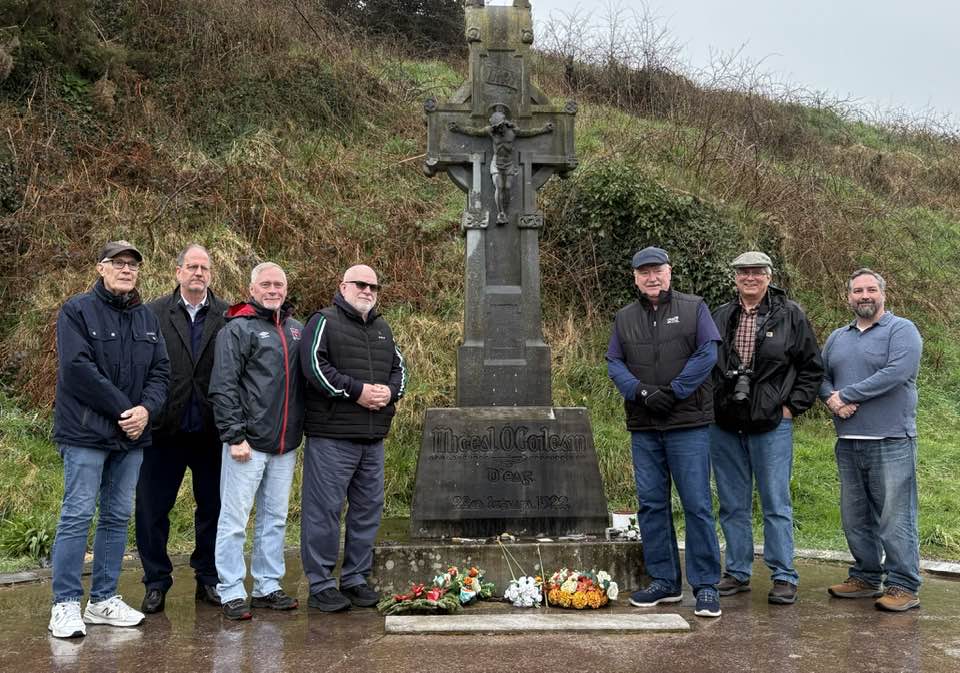
Béal na Bláth, Cork A roadside monument marks the spot where Michael Collins was mortally wounded when his column was ambushed by Anti-Treaty forces on August 22, 1922.
Muckross House
Muckross House, Gardens and Traditional Farms, premier visitor attraction. Set in the heart of Killarney National Park, Muckross is known throughout the world for its scenic beauty and cultural attractions, including the magnificent house itself.
Ring of Kerry
We traveled the Ring of Kerry, a scenic drive around the Iveragh Peninsula in southwest Ireland’s County Kerry. Its 111 mile-long, cicular router takes in rugged and verdant costal landscapes and rural seaside villages.
The Derrynane House
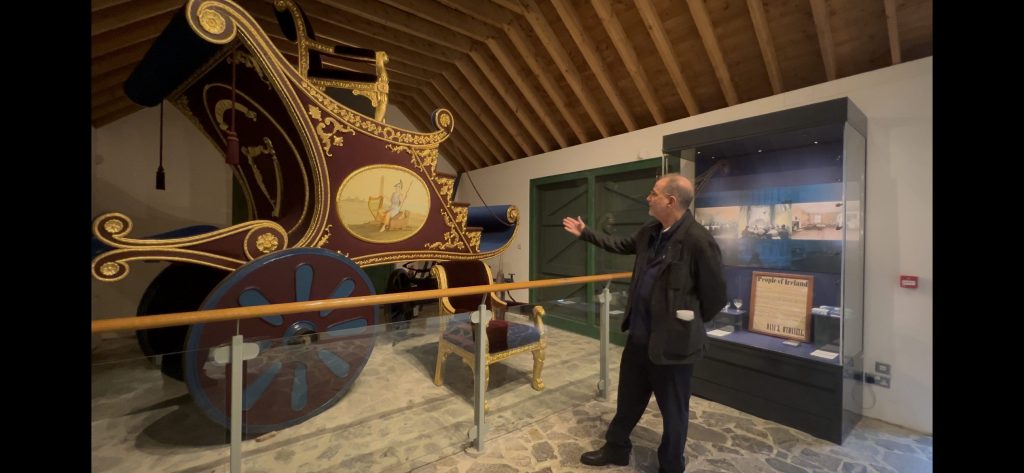
Located on the Ring of Kerry we visited the Derrynane House, the home of Daniel O’Connell, cahmpion of Catholic Emancipation and leader of the Irish Nationalist Party in the British Parliament. Darrynane House, now an Irish National Monument, servered as the focal point of our exploration of the life, triumps and failures of the man who was known as “The Liberator.”
Killarney, County Kerry
Rock of Cashel
The Rock of Cashel sometimes known as the “High King of Irish Monuments,” was the traditional seat of the Kings of Munster. This magnificent group of structures, situated on a mound rising from teh County Tipperary countryside, is the finest example of medieaval architecture in Ireland. Brian Boru, who wrested the kingship of Munster from the Eónanochta clans and then established himself as the High King of Ireland, was crowned here in 978.
New Grange/Hill of Tara
These remarkable pre-Christian sites speak to the highly developed civilization that existed in ancient Ireland. The Stone Age builders of the Newgrange monument in the Boyne Valley demonstrated their sophistication by aligning the passage to the main chamber to take light at the Winter Solstice every year. The burial mound at the Hill of Tara dates to the Iron Age and later became the seat of the High Kings of Ireland.
General Post Office (“GPO”)
On April 24, 1916, Patrick Pearse stepped out in front of the General Post Office (“GPO”) on O’Connell Street in Dublin and proclaimed an Irish Republic. Pearse famously acknowledged Irish America in the Proclamation, noting that Ireland, in striking for her freedom, was “supported by her exiled children in America.” Our group of descendants of those exiled children will visit the GPO and other 1916 battle sites.
Glasnevin, Ireland’s National Cemetery
We then traveled to Glasnevin, Ireland’s National Cemetery where the stories of 1.5 million people are faithfully preserved at Ireland’s largest burial place, a beautifully restored garden cemetery featuring epic monuments to past. From poets and presidents, singers, and suffragettes, the ordinary and the extraordinary – the stories of those who shaped Ireland’s history are brought to life.
Moore Street
During our recent tour in Dublin, we had the honor of meeting with the Save Moore Street Committee, a passionate group dedicated to preserving one of Ireland’s most sacred historical sites. They led us on a powerful walking tour from the GPO to Moore Street, tracing the path of the 1916 Easter Rising rebels during their final retreat and surrender. Along the way, we stood before original buildings that still bear witness to that pivotal moment in Irish history. The Committee continues to fight for the protection and proper recognition of this National Monument, ensuring that future generations can walk these streets and remember the sacrifice made for Irish freedom.