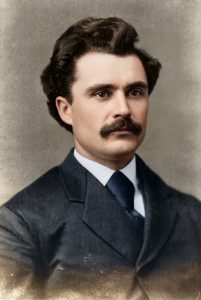
When John Boyle O’Reilly arrived in Boston in 1869, he was not a celebrated poet or civic leader. He was a Fenian exile who had escaped from a British penal colony in Western Australia after being transported there for revolutionary activity. Within twenty years he would become one of the most respected voices in the city: editor of The Boston Pilot, a widely read poet, and a civic leader whose influence extended far beyond the Irish immigrant community.
O’Reilly rebuilt his life in America without abandoning the convictions that had sent him into exile. He remained committed to Irish freedom, but he also believed that Irish immigrants in the United States had a responsibility to take their place in American civic life.
From Fenian Prisoner to American Exile
O’Reilly was born in 1844 in County Meath, Ireland, into a family with strong nationalist traditions. As a young man he joined the Irish Republican Brotherhood, the secret revolutionary movement commonly known as the Fenians.
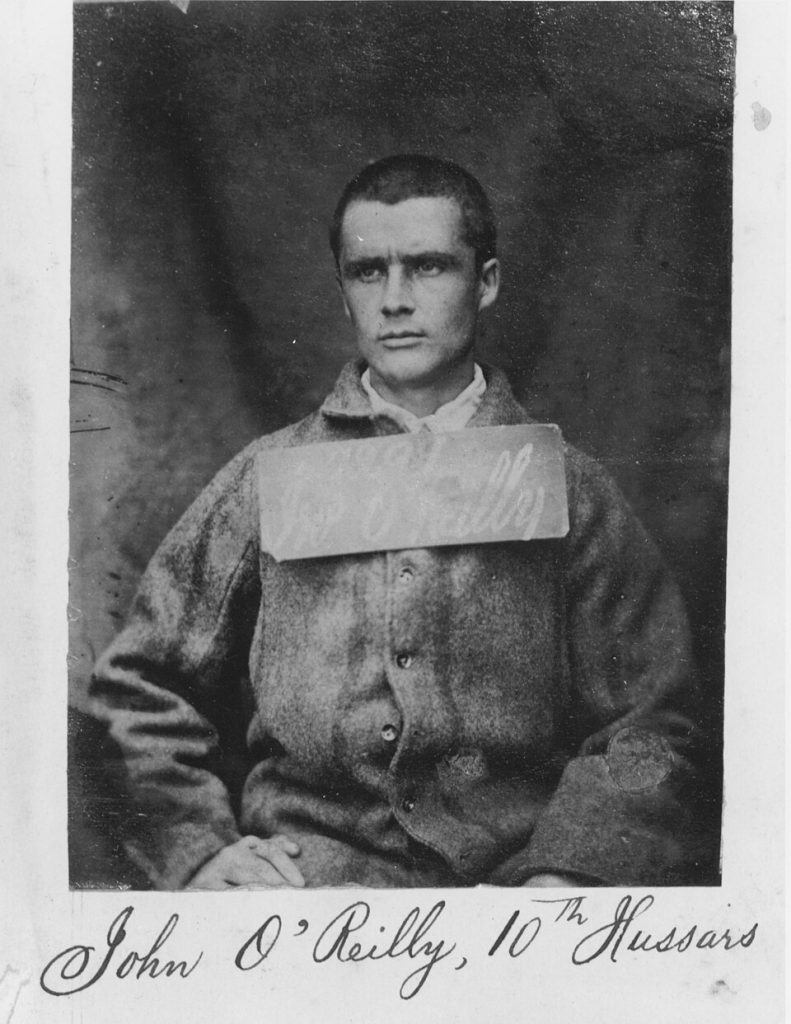
In 1866 he was arrested for organizing within the British army on behalf of the movement. Convicted of treason, he was sentenced to transportation to Western Australia, one of the harshest penalties imposed on Fenian prisoners.
Three years later he escaped aboard the American whaling ship Gazelle and eventually reached the United States. His escape made him a hero among Irish nationalists, but it also meant starting over in a country where Irish immigrants still faced strong prejudice.
Boston became the place where he did exactly that.
Editor of The Boston Pilot
Soon after arriving in Boston, O’Reilly joined the staff of The Boston Pilot, the leading Irish Catholic newspaper in the United States. In 1876 he became its editor.
Under O’Reilly the paper broadened its focus beyond Irish nationalist issues. He wrote about labor rights, civil liberties, and the responsibilities of citizenship. He believed Irish Americans should not remain an isolated community but should demonstrate their commitment to American civic life.
His writing earned him respect in Boston’s literary circles as well as among Irish American readers. O’Reilly became known not only as a journalist but also as a poet whose work reached a national audience.
Sport, Character, and Irish Respectability
O’Reilly also challenged how Irish immigrants were viewed in American society. Rather than distancing himself from working-class Irish culture, he embraced it—particularly through athletics.
He moved easily within Boston’s growing athletic community and maintained a friendship with heavyweight champion John L. Sullivan, the most famous Irish American athlete of the era.
In 1888 O’Reilly published Ethics of Boxing and Manly Sport, defending boxing as a disciplined contest that required courage, restraint, and physical training. At a time when Irish immigrants were often portrayed as violent or unruly, he argued that athletic competition reflected discipline and character.
The Catalpa Rescue and Fenian Solidarity
O’Reilly never forgot the Fenian prisoners who remained in British custody in Western Australia.
Working with Irish nationalist leader John Devoy and the organization Clan na Gael, Irish Americans organized a daring rescue mission. In 1876 the whaling ship Catalpa sailed to Western Australia and carried six Fenian prisoners to freedom.
The operation itself was carried out by men on the ground such as Thomas Breslin and Captain George S. Anthony, but O’Reilly helped rally Irish-American support for the effort and later helped tell the story in the American press.
The rescue demonstrated something new. The Irish in America now had the resources and influence to affect events across the globe.
Staking a Claim to the American Revolution
“Call it riot or revolution,
John Boyle O’Reilly, poem honoring Crispus Attucks (1888)
His hand first clenched at the crown…”
In the 1880s O’Reilly joined other civic leaders in Boston in an effort to erect a monument honoring the victims of the Boston Massacre of 1770.
The memorial commemorated the five men killed when British soldiers fired on a crowd: Crispus Attucks, Samuel Gray, James Caldwell, Samuel Maverick, and Patrick Carr, an Irish immigrant.
For decades Boston’s Black community had sought public recognition for Attucks as the first martyr of the American Revolution. Earlier efforts had stalled, but by the late 1880s the political landscape of Boston had changed. Irish Americans had gained growing influence in the city’s civic life, and together with Black leaders they pressed forward with the monument.
The project met resistance from Boston’s Brahmin establishment, who had long downplayed the Boston Massacre as a street riot and argued that the men killed, dockworkers, laborers, and an Irish immigrant, were hardly the kind of people of Boston should honor with a monument.
Supporters prevailed and the monument was dedicated on Boston Common on November 14, 1888.
O’Reilly was asked to compose and deliver a poem for the unveiling ceremony. By honoring Attucks alongside Patrick Carr, the memorial connected two communities still struggling for full acceptance in American life—African Americans and Irish immigrants—and asserted that both had stood at the beginning of the American Revolution.
An Irish Rebel Becomes an American Voice
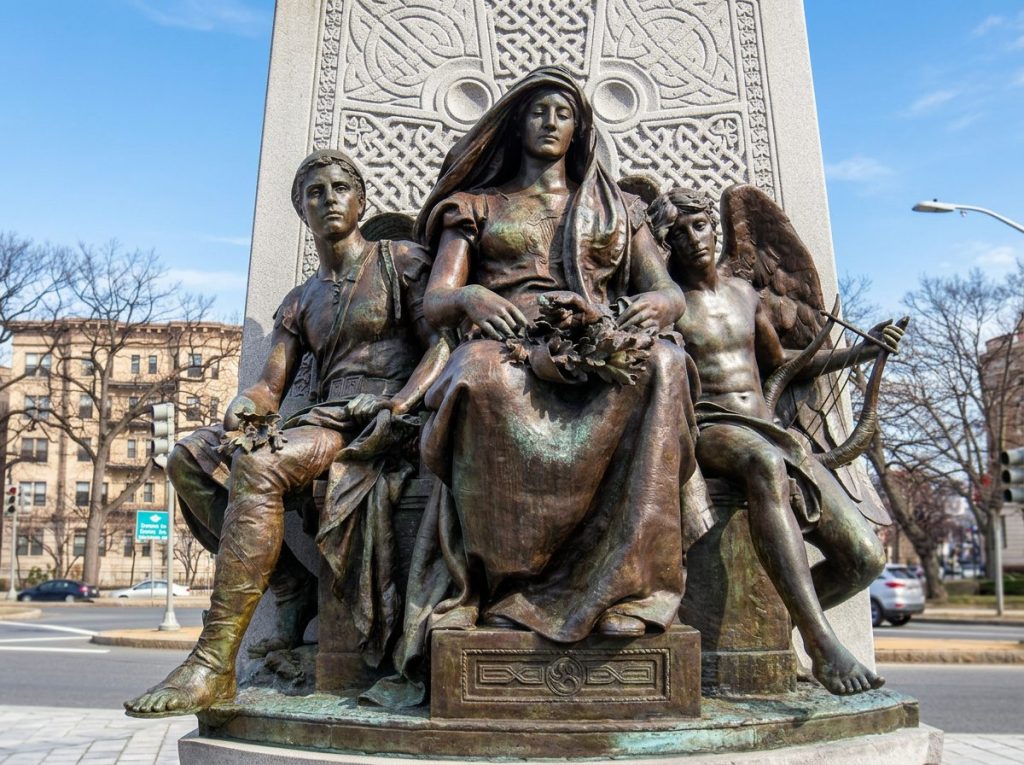
One small episode illustrates the character behind O’Reilly’s public ideals. In 1886, while walking along Boston Harbor, he saw a young Black boy fall into the water and begin to drown. O’Reilly immediately dove in and pulled the child to safety. Newspapers reported the rescue at the time, but O’Reilly declined public praise.
John Boyle O’Reilly died suddenly in 1890 at the age of forty-five. In the two decades he spent in the United States, he transformed himself from a transported Fenian prisoner into one of the most influential Irish American voices of the nineteenth century.
Through journalism, literature, and civic leadership he showed that Irish immigrants were not outsiders to the American story.
They were participants in it.